 comparison
Luxury Rental vs Hotel Kona: Which Is Worth It?
Table of Contents
- Luxury Rental vs Hotel Kona: The Core Trade-Offs at a Glance
- Cost Breakdown: Nightly Rates, Resort Fees vs Rental Cleaning Fees
- Space, Amenities, and the Full Kitchen Advantage
- Best Luxury Resorts Kona: What Full-Service Hotels Offer
- Short-Term Rental Regulations Hawaii: What Travelers Need to Know
- Who Should Choose a Luxury Rental in Kona: A Decision Framework
- Cancellation Policies, Booking Flexibility, and What to Watch For
- Conclusion
Last Updated: August 12, 2026
Luxury Rental vs Hotel Kona: The Core Trade-Offs at a Glance
The decision between a luxury rental vs hotel Kona is more consequential than most booking guides admit. Luxury vacation rentals win on space, privacy, kitchen access, and cost-per-person for groups. Full-service resorts win on daily housekeeping, on-site dining, concierge access, and structured activities. Neither is universally better, the right answer depends entirely on how you actually vacation.
High-end vacation rentals in the Keauhou and Kailua-Kona area now offer renovated interiors, resort community amenities, and spa-caliber bathrooms that rival five-star hotel rooms. The difference is increasingly about service model, not quality.
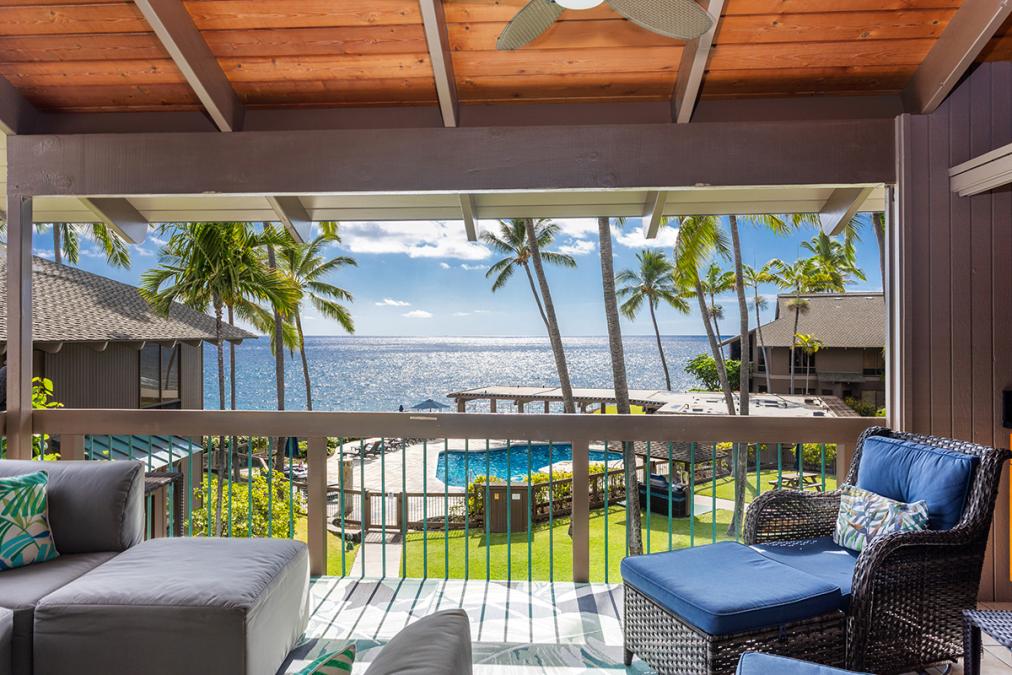
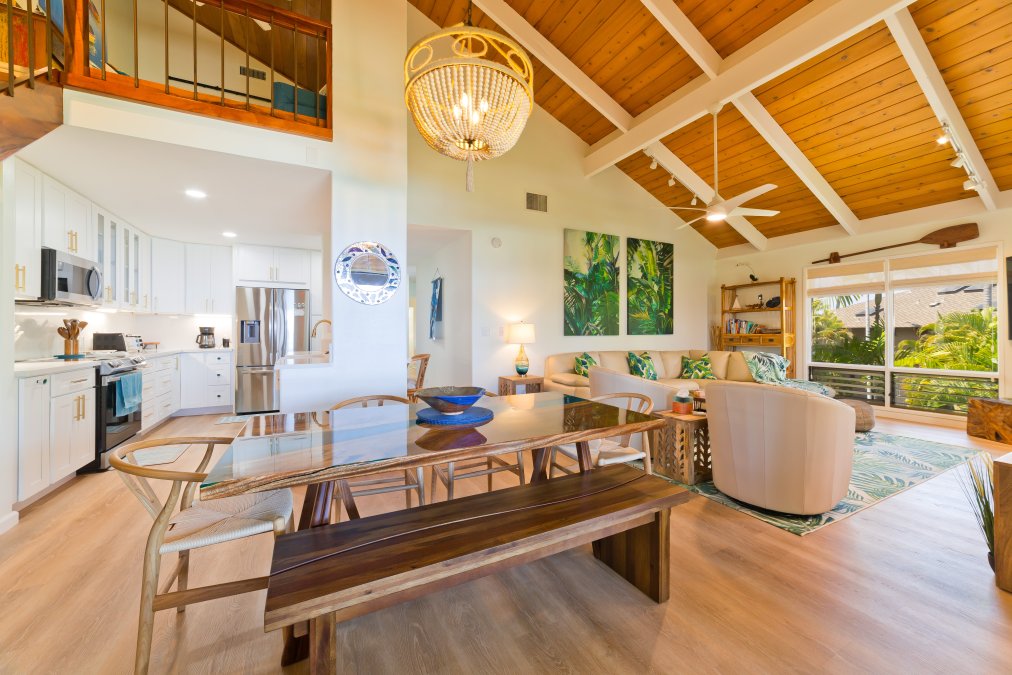
A spacious open-concept luxury condo living area with vaulted wood ceilings, modern furnishings, and large sliding glass doors opening onto a lanai with a sweeping ocean view at golden hour, warm natural light filling the room
Factor | Luxury Vacation Rental | Full-Service Resort |
|---|---|---|
Space | 1,000-2,000+ sq ft | 350-600 sq ft typical |
Kitchen | Full kitchen included | Kitchenette or none |
Privacy | Top-floor, private entry | Shared corridors, pools |
Daily Housekeeping | Usually not included | Included |
Concierge | Limited or self-managed | Full-service, 24-hour |
Cost for Groups | Lower per-person | Higher per-person |
Resort Fees | None | $40-$75/night typical |
Cancellation Flexibility | Varies by host | Varies by property |
Cost Breakdown: Nightly Rates, Resort Fees vs Rental Cleaning Fees
The sticker price comparison between a luxury rental and a resort room is almost always misleading. Resorts list an attractive nightly rate, then add mandatory charges that significantly inflate the final bill.
What Resort Fees Actually Cover
Resort fees at Kona's major properties typically run between $40 and $75 per night, added on top of the quoted room rate. These fees generally cover amenities like pool access, fitness center use, Wi-Fi, and sometimes a daily credit toward food and beverage, whether you use them or not. For a 10-night stay, that's potentially $500-$750 in fees before a single meal or activity.
Parking at many Kona resorts adds another $30-$50 per night, a cost that simply doesn't exist at most vacation rentals.
How Cleaning Fees and Security Deposits Work in Vacation Rentals
Vacation rentals charge a cleaning fee once per stay, not per night, making it proportionally cheaper the longer you stay. For a two-week stay, a cleaning fee becomes negligible when spread across 14 nights. Security deposits are held temporarily and released after checkout if the property is left in good condition.
For groups of four or more staying five or more nights, a luxury vacation rental almost always costs less on a per-person, total-trip basis once resort fees, parking, and daily dining costs are factored in.
Space, Amenities, and the Full Kitchen Advantage
The full kitchen is the single biggest practical advantage a luxury vacation rental holds over a resort room. A well-stocked kitchen changes the economics and rhythm of a Hawaiian vacation entirely. Breakfast on the lanai instead of a $35 resort buffet. Poke bowls from the local market eaten with an ocean view. Snacks packed for a day of snorkeling without resort poolside tabs. Over a 10-night stay, a family of four can realistically save several hundred dollars on food while eating better and more flexibly than resort dining allows.
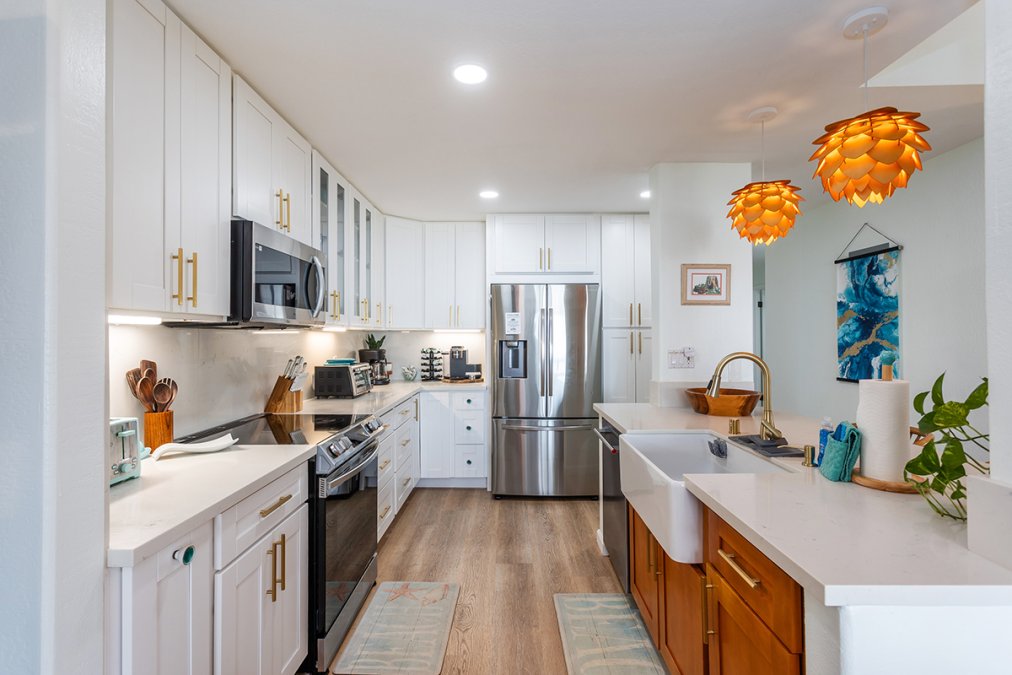
A fully equipped modern luxury kitchen inside a vacation rental condo, with high-end stainless steel appliances, stone countertops, pendant lighting, and a window framing a view toward the Pacific Ocean in afternoon light
Square Footage and Privacy: What You Actually Get
A standard luxury resort room on the Kona Coast typically ranges from 350 to 600 square feet. A luxury vacation rental condo commonly offers 900 to 1,800 square feet or more, with separate bedrooms, a living room, dining area, and private lanai. For families with children or groups of friends, this is the difference between a comfortable stay and a cramped one.
Privacy is equally significant. Top-floor end units eliminate shared walls on two sides and remove foot traffic above. The lanai becomes genuinely private space, not a balcony visible from the pool deck.
Concierge and Housekeeping: Resort Services vs Self-Catering
Full-service properties offer 24-hour room service, daily housekeeping, dedicated concierge staff, kids' clubs, and curated activity programming. If you want someone else to handle every logistical detail, a resort delivers that experience in a way a vacation rental cannot fully replicate.
Self-catering in a luxury rental means managing your own meals and arranging your own activities. For many travelers, this is a feature. Some luxury rental managers do offer concierge-style services: pre-arrival grocery stocking, activity bookings, and in-home spa treatments. The quality and availability varies considerably, so confirm exactly what's available before booking.
Best Luxury Resorts Kona: What Full-Service Hotels Offer
The Four Seasons Resort Hualalai sits at the top of the market, with a King's Pond saltwater snorkeling pool, championship golf, multiple dining venues, and a kids' club. Mauna Lani, part of the Auberge Resorts Collection, offers a recently renovated property with a 25-meter lap pool, three golf courses, and wellness programming including an Auberge Spa. Kona Village, a Rosewood Resort, offers stand-alone thatch-roofed accommodations with a strong sustainability focus and deliberately secluded atmosphere.
What unites these properties is the service model: daily housekeeping, 24-hour concierge, curated dining, and structured activities are all handled for you. The trade-off is space, privacy, and cost, particularly for larger groups. These resorts are designed for travelers who want every detail managed and are comfortable paying a premium for that ease.
Short-Term Rental Regulations Hawaii: What Travelers Need to Know
Short-term rental regulations Hawaii has implemented are more complex than most travelers realize. As documented in Hawaii County Code regulations on short-term vacation rentals, the County of Hawaii has specific zoning and permitting requirements for short-term rentals on the Big Island. Properties must hold a valid Non-Conforming Use Certificate or be located in a zone where short-term rentals are permitted. The Keauhou resort community falls within zoning that accommodates short-term vacation rentals when properly permitted.
Booking a property that operates outside these regulations creates real risk: the rental could be shut down before or during your stay, your booking could be canceled without legal recourse, and you may have difficulty recovering your payment. According to Hawaii Tourism Authority's guidance on legal vacation rentals, travelers should verify that any rental holds appropriate permits and tax registration numbers.
The practical checklist for travelers:
- Confirm the property has a valid Hawaii General Excise Tax license number
- Verify the property has a Transient Accommodations Tax registration
- Check that the listing includes a permit or registration number
- Book through a host who can provide documentation on request
Reputable luxury rental operators will provide this information readily. Hesitation on compliance questions is a meaningful warning sign.
Who Should Choose a Luxury Rental in Kona: A Decision Framework
The luxury rental vs hotel Kona decision comes down to a handful of concrete variables.
Families and Groups: Space Over Services
Families traveling with children and groups of four or more almost always benefit from a vacation rental. Separate bedrooms mean actual sleep. A full kitchen means feeding children on their schedule without waiting for room service. A private lanai means morning coffee without navigating a lobby.
For families staying a week or longer, the cost advantage compounds. Grocery runs replace daily resort dining bills. Laundry facilities eliminate the need to pack for every scenario or pay resort laundry rates. A 1,400-square-foot condo with two bedrooms, a living room, and a large covered lanai accommodates a family of four in genuine comfort at significantly lower cost than two adjacent resort rooms.
Couples, Remote Workers, and Extended Stays
Couples planning a romantic getaway have a genuine choice. Resorts offer the romance of being served: champagne delivered to the room, spa treatments booked by concierge, sunset dinners at beachfront restaurants. A luxury vacation rental offers a different romance: privacy, a spa-like primary suite, cooking dinner together with fresh fish from the local market, and waking to an unobstructed ocean view from your own lanai.
Remote workers and extended-stay travelers are among the clearest beneficiaries of the rental model. Reliable high-speed internet, a dedicated workspace, a full kitchen for daily meals, and in-unit laundry make a month-long stay genuinely livable in a way a hotel room cannot.
Cancellation Policies, Booking Flexibility, and What to Watch For
Cancellation policies are where the luxury rental vs hotel Kona comparison gets genuinely complicated.
Full-service resorts typically offer tiered cancellation policies: free cancellation up to 48-72 hours before arrival for standard bookings, with more restrictive terms for promotional rates. Vacation rental cancellation policies vary far more widely. Some hosts offer flexible policies with full refunds up to five days before arrival. Others require non-refundable deposits at booking or have strict policies that forfeit the full rental amount for late cancellations.
What to watch for when booking a vacation rental:
- Flexible vs. Strict policies: Understand exactly how much you lose if plans change at different time intervals
- Force majeure clauses: Does the policy address flight cancellations, natural disasters, or illness?
- Security deposit return timeline: Confirm in writing how long after checkout the deposit is returned
- Minimum stay requirements: Many luxury rentals require 5-7 night minimums, particularly during peak season
If your travel dates are uncertain, book a resort with a clear free-cancellation window. If your dates are fixed and you're staying a week or more, a vacation rental's cancellation terms are generally manageable and the overall value proposition is stronger.
Consideration | Choose a Luxury Rental | Choose a Resort |
|---|---|---|
Group size | 4 or more people | 1-2 people |
Stay length | 5+ nights | 1-4 nights |
Budget priority | Cost-per-person value | All-inclusive ease |
Kitchen access | Essential | Not needed |
Privacy | High priority | Less important |
Daily housekeeping | Can manage without | Non-negotiable |
Remote work | Extended stay planned | Short leisure trip |
Flexibility needed | Dates are confirmed | Dates may change |
Choosing between a luxury rental and a resort in Kona comes down to whether you want to live in a place or be taken care of in one. For families, groups, remote workers, and anyone staying a week or more, the space, privacy, and cost advantages of a well-chosen vacation rental are hard to argue with. Kona Ocean Views offers newly renovated, top-floor condos in the Keauhou community with large covered lanais, spa-like primary suites, and resort community amenities. Book directly with Kona Ocean Views to find the right property for your trip.
Frequently Asked Questions
What are the pros and cons of staying in a luxury rental versus a hotel in Kona?
A luxury rental in Kona gives you significantly more space, a full kitchen, greater privacy, and the feel of a private home. The trade-off is that you handle your own meals and daily logistics without daily housekeeping unless arranged separately. A full-service resort delivers concierge support, on-site dining, and consistent hospitality, but at a higher nightly rate plus resort fees, and with far less square footage per dollar spent.
Are there specific zoning laws for short-term vacation rentals in Kona?
Yes. Hawaii County regulates short-term rentals through its Vacation Rental Ordinance, which requires properties to hold a valid Nonconforming Use Certificate or be located in a designated resort zone. Rentals operating outside these rules are illegal, regardless of how they appear on booking platforms. Before reserving any vacation rental in Kona, confirm the property has a current, compliant permit — a reputable host will provide this information upfront without hesitation.
Which option offers better value for families visiting the Big Island?
For families staying five nights or more, a luxury rental almost always delivers better cost-effectiveness. A full kitchen eliminates daily restaurant bills for breakfast and lunch, laundry facilities reduce packing stress, and the additional square footage means children have room to move without disturbing other guests. Resort fees at full-service properties add a fixed daily charge regardless of which amenities you use, which can significantly inflate the total travel budget over a two-week stay.
Do luxury rentals in Kona provide the same amenities as resort hotels?
Many luxury vacation rentals in Kona sit within resort communities and include access to shared pools, fitness centers, and tennis courts. What they typically do not include is 24-hour room service, a full-service spa, or a dedicated concierge on call. The gap narrows considerably when the rental is newly renovated with high-end finishes, a spa-like primary suite, and a large lanai — but travelers who want daily housekeeping and on-site dining will find a full-service resort better suited to those needs.
How does the 90-day rule impact vacation rental availability in Kona?
Hawaii's 90-day rule refers to county restrictions that, in certain residential zones, limit short-term rentals to stays of 90 days or longer. This effectively removes many residential properties from the short-term rental inventory available to vacationers. The practical impact for travelers is a smaller pool of legally operating short-term rentals in non-resort zones. Booking through a provider who operates within a designated resort community sidesteps this issue entirely, since resort-zoned properties are not subject to the same restrictions.
This article was written using GrandRanker